The Volkswagen Virtus has been on sale in India since 2022 and competes in the mid-size sedan segment. The upcoming facelift is expected to help the model remain competitive against the Hyundai Verna, Honda City and Skoda Slavia.
Rather than introducing an entirely new generation, Volkswagen is likely to focus on styling revisions, equipment upgrades and selected mechanical changes. The overall silhouette, cabin space and core platform are expected to remain largely unchanged.
1. Revised Exterior Design
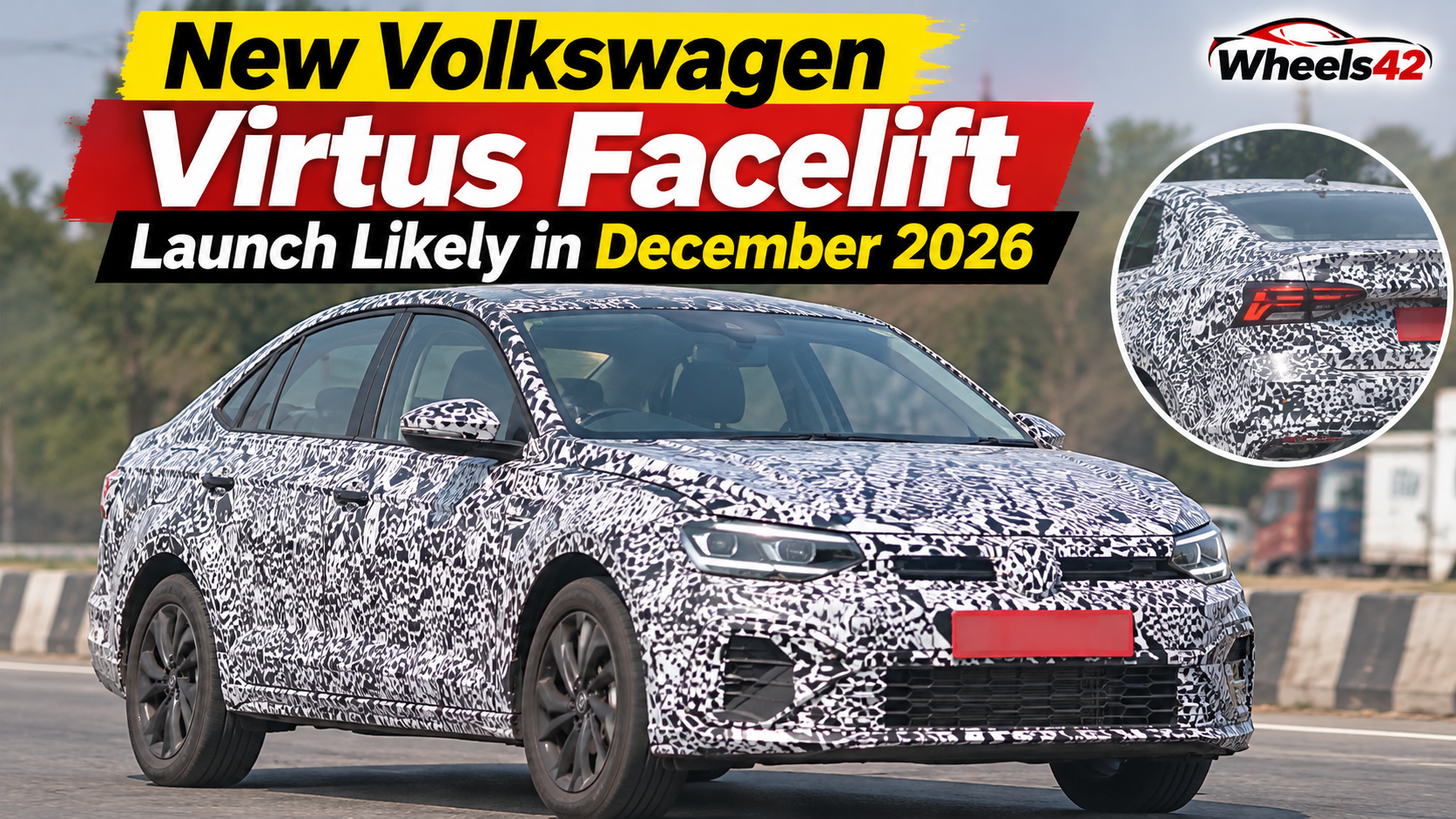
The 2026 Volkswagen Virtus facelift has been spotted testing on Indian roads, with camouflage concealing several changes to the front and rear sections.
At the front, the sedan is expected to receive a redesigned grille, updated LED headlamps and revised daytime running lights. The front bumper could also feature a new design to give the car a fresher appearance.
One of the anticipated styling highlights is a connected lighting treatment across the front grille, potentially incorporating an illuminated Volkswagen logo. This would bring the sedan closer to the design direction seen on newer Volkswagen models.
The side profile is expected to remain largely unchanged, retaining the long bonnet, sharp character lines and sloping roofline. However, revised alloy-wheel designs could distinguish the facelift from the outgoing model.
At the rear, the Virtus could receive updated LED tail-lamp graphics, a redesigned bumper and an illuminated Volkswagen badge. A full-width light bar has been suggested in reports, but the final production design remains to be confirmed.
2. Interior Could Get More Technology
The cabin is expected to retain the current dashboard layout, with Volkswagen potentially introducing improvements to the infotainment system, instrument display and interior finishes.
The updated sedan could receive a larger digital instrument cluster, potentially measuring around 10.25 inches, along with revised infotainment software. Additional ambient lighting and improvements to cabin materials are also possible.
Other expected convenience features include front parking sensors, updated connected-car functions and potentially a 360-degree camera, depending on the variant.
The current Virtus already offers features such as a touchscreen infotainment system, a digital driver's display, ventilated front seats, automatic climate control and a sunroof on selected variants. Volkswagen could revise the equipment list to improve the facelift's overall value proposition.
However, the exact screen sizes, feature availability and variant-wise equipment have not been officially confirmed.
3. 1.0-Litre TSI Engine Expected to Continue
The facelift is expected to retain the existing 1.0-litre, three-cylinder TSI turbo-petrol engine. In the current model, this engine produces approximately 115 PS and 178 Nm of torque.
The engine is designed to offer a balance between everyday performance and efficiency. It is suitable for city driving while providing sufficient turbocharged performance for highway journeys.
The current 1.0-litre TSI is offered with a six-speed manual gearbox and a six-speed torque-converter automatic transmission. The facelift is expected to retain the manual option while introducing a new eight-speed automatic gearbox in place of the existing six-speed automatic.
The additional transmission ratios could help improve gear selection, cruising refinement and engine-speed management. Actual fuel economy and performance will depend on the final transmission calibration and driving conditions.
4. 1.5-Litre TSI Engine for GT Variants
The more powerful 1.5-litre, four-cylinder TSI turbo-petrol engine is expected to continue in the Virtus GT variants.
In the current model, the engine produces approximately 150 PS and 250 Nm of torque. It is paired with a seven-speed dual-clutch automatic transmission.
This engine is aimed at buyers who prioritise stronger acceleration and a more performance-oriented driving experience. The GT variants also offer styling and equipment differences that distinguish them from the standard versions.
No major engine-output changes have been confirmed for the facelift. Volkswagen is expected to concentrate primarily on the exterior, interior and transmission updates.
5. Expected Specifications
|
Feature
|
Expected details
|
|
Model
|
Volkswagen Virtus facelift
|
|
Expected launch
|
1-Dec-26
|
|
Body style
|
Mid-size sedan
|
|
Exterior
|
Revised grille, bumpers and lighting
|
|
Alloy wheels
|
New design expected
|
|
1.0-litre TSI engine
|
115 PS, 178 Nm
|
|
1.0-litre transmission
|
Six-speed manual; eight-speed automatic expected
|
|
1.5-litre TSI engine
|
150 PS, 250 Nm
|
|
1.5-litre transmission
|
Seven-speed DSG expected to continue
|
|
Interior
|
Updated displays and equipment possible
|
6. Safety and Convenience Features
Safety equipment will remain an important consideration for the updated Virtus. The current sedan offers multiple airbags, electronic stability control and other safety systems, with equipment varying by variant.
Volkswagen could introduce additional convenience and parking-assistance features as part of the facelift. A 360-degree camera and front parking sensors are among the possibilities reported for the updated model.
However, the final safety specification and availability of individual features are not yet confirmed. Buyers should check the official variant-wise equipment list before making a purchase decision.
7. Expected Price in India
The current Volkswagen Virtus is positioned in the premium end of the mid-size sedan segment. The facelift could carry a modest price increase if it receives additional equipment, revised styling and the new automatic transmission.
The final pricing will depend on the variant and engine configuration. Volkswagen has not announced official prices for the updated sedan, so any estimates should be treated as provisional.
The company could continue offering multiple variants to serve buyers looking for a relatively accessible turbo-petrol sedan as well as customers interested in the more powerful GT versions.
8. Rivals of the Volkswagen Virtus Facelift
The updated Virtus will continue to compete with the Hyundai Verna, Honda City and its closely related sibling, the Skoda Slavia.
The Hyundai Verna attracts buyers with its technology and feature list, while the Honda City has a long-standing reputation in the sedan segment. The Skoda Slavia shares its underlying platform and several mechanical components with the Virtus.
The facelift's success will depend on its styling, equipment, driving experience, pricing and ownership costs. An eight-speed automatic option for the 1.0-litre engine could also help Volkswagen differentiate the updated sedan.
Conclusion
The Volkswagen Virtus facelift is expected to launch in India in December 2026, bringing a fresh design and possible equipment improvements to the mid-size sedan. Expected changes include revised front and rear styling, updated lighting, new alloy wheels and a more technology-focused cabin.
The existing 1.0-litre and 1.5-litre TSI petrol engines are expected to continue, while the 1.0-litre version could gain an eight-speed automatic gearbox. Volkswagen has not yet officially confirmed the exact launch date, final specifications or prices.
The facelift should become a more compelling option for buyers who prefer a conventional sedan with turbo-petrol performance, provided the updated features and pricing remain competitive

 Khyati Sharma 2026-10-29